Global air cargo market demand rose over 11 percent year-on-year for a third consecutive month in March as buoyant e-commerce volumes and concerns over the impact of conflict in the Red Sea region on ocean freight services delivered an unexpected first quarter bonus for forwarders and airlines, according to the latest weekly market data from Xeneta. In what are typically weaker months of the year for the airfreight industry, these higher volumes outpaced growth in capacity supply in Q1, which increased by +8% YoY. In turn, this produced a jump in the global dynamic load factor, which is Xeneta’s measurement of cargo capacity utilization based on volume and weight of cargo flown alongside capacity available. Load factor in the opening three months of 2024 rose +2% pts YoY to 59%, and March performance has shown similar growth, edging up to 61%. “While this latest monthly data should be balanced against the lower base recorded in the corresponding month of 2023, when we saw weakened global manufacturing activities, Q1 2024 has still seen a surprisingly busy airfreight market. The level of demand in the first quarter doesn’t indicate a market which is running out of steam so far,” said Niall van de Wouw, Xeneta’s chief airfreight officer. “The question is, should we be surprised by it, or should we get used to it? Although the market didn’t benefit immediately, the Red Sea disruption was clearly a factor in these latest figures. Airfreight growth was primarily driven by increased volumes from the Middle East and South Asia as shippers shifted services from ocean to air to avoid Red Sea delays. We also cannot underestimate the importance of e-commerce growth, which shows no …
Read More »Virgin Atlantic offers 43,000 tonnes cargo capacity to & from India
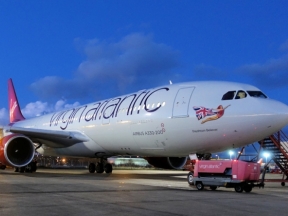
With the launch of direct flight to Bengaluru from San Francisco, Los Angeles, New York JFK and Seattle via London Heathrow and second daily flight to Mumbai, Virgin Atlantic is now offering an additional 25,000 tonnes of cargo capacity from the fashion, pharmaceuticals and tech sectors. “With five daily services, Virgin Atlantic Cargo will offer 43,000 tonnes of space available to and from India, which is a 336 percent increase in capacity versus 2019,” says an official release. Beginning October 27, 2024, the second daily Mumbai services will operate on the airline’s state-of-the-art Airbus A350-1000, the release added. Virgin Atlantic has a strategic partnership with IndiGo, India’s leading airline, and the partnership offers 36 additional destinations. “There is a huge opportunity for us in India, it has a dynamic, fast-growing economy and we’re anticipating a huge growth in demand for international travel to and from the region,” says Juha Jarvinen, Chief Commercial Officer, Virgin Atlantic. “We know both our customers and people love travelling to India and we have a rich history in the destination. Next year marks 25 years of operations and the first time that we’ll offer more than one million seats to India via London Heathrow with optimal connectivity for our U.S. customers from key tech hubs including San Francisco and Seattle. The launch of Bengaluru and doubling of our Mumbai services reaffirms our strong commitment and will allow our customers to travel seamlessly throughout India and beyond, flying on one of the youngest fleets in the skies, with our signature personalised service, delivered by our amazing people.”
Read More »‘Build dedicated cargo terminals at regional airports to enhance EXIM trade’
“Construction of new regional airports and developing dedicated cargo terminals will help increase cargo volumes and transportation, says Jaideep Mirchandani, Group chairman, Sky One. He adds, “There is need for launching more freighters on high-demand routes. Nowadays, most Indian airlines primarily use the belly cargo space in their fleet for cargo movement. “Inclusion of more wide-body aircraft and also rolling out more dedicated freighters can propel the growth of the cargo sector further. There is need to focus on exploring new routes and strengthening the existing ones through bilateral agreements with key trading partners to enhance cargo movement. A collaborative effort between various stakeholders focusing on technology adoption, infrastructure development, policy reforms, and skill development is necessary to maintain the growth momentum of the cargo sector.” “Upgrading existing road and rail linkages and developing multimodal logistics parks and a greater number of warehouses, will also result in the growth of the sector. Using technology to streamline customs clearance processes, automation to reduce paperwork, and switching to digital solutions for streamlining the whole process is also necessary,” he shares.
Read More »HACTL launches autonomous ramp vehicle for global operations
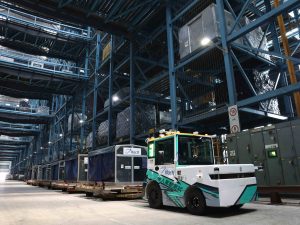
Hong Kong Air Cargo Terminals Limited (HACTL) has signed a Memorandum of Understanding (MOU) with Westwell Holdings (Hong Kong) to introduce Autonomous Electric Tractors (AETs) to its ramp operations this year. HACTL aims to develop autonomous vehicles which, in addition to the relatively simple task of towing cargo dollies, automatically couple and uncouple the dollies, and adjust to their differing specifications, according to the press release from HACTL. Once testing and final on-site tuning and mapping to HACTL’s specific requirements are completed, the AETs will be integrated into HACTL’s current driver-controlled tractor fleet, and will initially tow loaded import ULDs on a 1km route between the outdoor ULD staging area, and the main terminal ULD system intake deck of SuperTerminal 1. AETs will be used on longer and more complex routes in due course. Safety is the major consideration in operating the new vehicles. Each AET is equipped with a highly accurate GNSS system and uses multiple HD cameras and LiDAR sensors to detect all objects and avoid collisions. The AETs have similar capabilities to the current diesel-powered tractor fleet, but operational speeds will be restricted to 8kph as an additional safety measure, the release added.
Read More »Conqueror Freight Network launches revamped website with contemporary design
Conqueror Freight Network has launched a revamped website with a fresh and contemporary design, featuring a more visual interface that promises to captivate and engage visitors from the moment they arrive. The launch of the new website comes together with a new web app that will allow members to connect with reliable freight forwarders in over 260 cities worldwide, enhancing the reach and effectiveness of their logistics networks. Antonio Torres, President and Founder of Conqueror Freight Network, expresses the significance of this digital leap, stating, “These new innovative platforms represent a significant milestone in our ongoing commitment to providing unparalleled support and resources to our members. With a focus on simplicity and ease of use, the new website interface ensures that visitors can navigate the site effortlessly, regardless of their technical expertise. For its part, the web app redefines the way logistics professionals collaborate, facilitating swift and efficient communication between members and partners. This is yet another significant stride in Conqueror’s digital evolution.” The website showcases a modern design aesthetic, incorporating visually appealing elements to enhance user engagement. With streamlined navigation and an intuitive layout, users will find it easier than ever to access all the vital information, connect with members on WhatsApp and WeChat with just a click, and explore the numerous opportunities that the network makes available. Thanks to the redesigned navigation structure finding relevant information and accessing essential resources is now more intuitive than ever. Conqueror’s web app enables members to stay connected on the go, allowing them to manage partnerships and logistics operations directly from their mobile devices. Moreover, a user-friendly interface facilitates the location of agents in specific cities, simplifying the process of finding reliable …
Read More »IATA reports an 11.9% jump in air cargo volumes for February
The International Air Transport Association (IATA) released data for February 2024 global air cargo markets showing continuing strong annual growth in demand. Total demand, measured in cargo tonne-kilometers (CTKs*), rose by 11.9% compared to February 2023 levels (12.4% for international operations). This is the third consecutive month of double-digit year-on-year demand growth. Capacity, measured in available cargo tonne-kilometers (ACTKs), increased by 13.4% compared to February 2023 (16.0% for international operations). This was largely related to the increase in international belly capacity accompanying growth in passenger markets (29.5% year-on-year increase), which far exceeded international capacity on freighters (3.2% year-on-year increase). “February’s demand growth of 11.9% far outpaced the 0.9% expansion in cross-border trade. This strong start for 2024 could see demand surpass the exceptionally high levels of early 2022. It also shows air cargo’s strong resilience in the face of continuing political and economic uncertainties,” said Willie Walsh, IATA’s Director General. Several factors in the operating environment should be noted: Global cross-border trade increased by 0.9% in January. In February, the manufacturing output Purchasing Managers’ Index (PMI) climbed to 51.2, indicating expansion. The new export orders PMI also rose to 49.4, remaining slightly below the 50 threshold that would indicate growth. February year-on-year inflation dropped to 2.8% in the EU while rising to 2.8% and 3.2% in Japan and the US respectively. After four months of deflation, China reported a 0.7% increase in inflation year-on-year—a positive development amid concerns over China’s economic slowdown.
Read More »GE Aerospace to invest INR 240 cr in Pune facility
GE Aerospace has announced an investment of over Rupees 240 crore (~USD 30 million) to expand and upgrade its manufacturing facility in Pune. The investment will allow the facility to add new projects and manufacturing processes by acquiring machines/equipment and specialized tools along with capacity enhancement of existing products. “Our team at are Multi-modal Manufacturing facility at Pune has a strong focus on safety, quality and delivering for our customers. I am delighted to see the expansion at this site which has already become a strong contributor to our global supply chain of aircraft engine components,” said Mike Kauffman, vice president, Global Supply Chain at GE Aerospace. “This investment helps us to continue our growth in aerospace in India, giving us the resources, we need to meet increasing customers’ demand,” said Amol Nagar the managing director for GE Aerospace’s Pune facility. Inaugurated by Prime Minister Modi in February 2015, the factory produces components for commercial jet engines. These are supplied to GE’s global factories where they are used to assemble G90, GEnx, GE 9X, which is the world’s most powerful commercial jet engine, and the LEAP engines by CFM, a GE and Safran joint venture. The facility has been instrumental in developing local aerospace manufacturing talent having trained over 5000 people since inception in specialized aerospace precision manufacturing processes. Certified under ISO14001 & ISO45001, the facility has built environmental best practices and stewardship in the community. For example, 30% of its power consumption comes from renewable sources, it has zero liquid discharge, recycles and reuses 1 crore litres of water(100 million litres) every year and recycling 20 metric tons of plastic.
Read More »AISATS hosts roadshow to showcase upcoming cargo facility at NIA
Air India SATS Airport Services (AISATS) organised a roadshow for the air cargo industry stakeholders, and invited air cargo associations such as ACAAI, unveiling its plans for the cargo facility at the upcoming Noida International Airport. Mr. Seow Chai Hing Kelvin of AISATS and Nitin Mittal of NOIDA International Airport Cargo welcomed the team. A site visit to the upcoming project at Jewar was also done showcasing the development stage of various projects.
Read More »Rewari Gati Shakti Cargo Terminal opens for rail freight operations
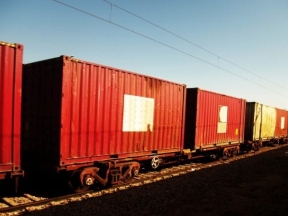
DFCCIL Managing Director RK Jain recently inaugurated the Rewari Gati Shakti Cargo Terminal by flagging off a container carrier freight train. Other senior officials of DFCCIL including Director Operation and Business Development N Srinivas and Director Finance Heera Ballabh were also present on the occasion.This terminal has been commissioned by DFCCIL within a short span of 75 days at New Rewari Station Line No 10 of Western DFC. New Rewari Gati Shakti Cargo Terminal is an important terminal for container traffic. For this, an investment of about Rs 8 crore has been made by the GCT operator. The entire terminal access charge will be passed on by the GCT operator to the Indian Railways i.e. DFCCIL. This is a revolutionary change in the existing system of Indian Railways.With the commissioning of this terminal, there is a possibility of an increase of about 30 per cent in container traffic. The terminal will act as a logistics hub for EXIM container traffic under the ‘hub-and-spoke’ policy of the Indian Railways. With the commissioning of Rewari Gati Shakti Cargo Terminal, the operational efficiency of goods trains will increase and time and money will also be saved.
Read More »MightyFly unveils 3rd generation Cento aircraft eVTOL
MightyFly unveiled the third generation of the Cento aircraft, an autonomous hybrid eVTOL cargo aircraft designed to carry one hundred pounds of cargo for six hundred miles. “The new eVTOL incorporates several novel features including a sleek design that enables operational efficiency, the ability to accommodate a wide range of payload centre of gravity, autonomous centre of gravity determination and a larger cargo bay,” says an official release. “The new eVTOL will also present improved operational efficiency through MightyFly’s Autonomous Load Mastering System (ALMS) component, which will enable the aircraft to autonomously open and close its cargo bay door, receive and eject packages into and from the cargo bay opening, move and secure packages in the cargo bay via an internal positioning and locking system, and sense and compute weight and balance.” MightyFly’s third generation aircraft has been designed to accommodate a relatively large range of payloads’ centre of gravity, which allows for a high degree of variance in cargo contents, densities, constitutions, loading order, and tie-down positions, the release added. “The enlarged cargo bay will allow the delivery of larger packages and goods, including the traditional cooler boxes used to transport donor organs for transplantation and blood bags. It will also benefit additional use cases and businesses in the industries of logistics, manufacturing, healthcare, pharmaceutical, retail, automotive, and oil and gas, as well as organisations performing humanitarian and disaster relief work, and government’s defence teams executing various logistics and resupply missions.”
Read More »
Cargo Breaking News